Sciatica & Piriformis Syndrome: Manual Therapy for Radiating Leg Pain
Often mistaken for a lumbar disc herniation, deep piriformis muscle spasms compressing the sciatic nerve cause excruciating leg pain. Discover how targeted manual therapy, nerve mobilization, and dry needling deliver lasting relief at Wellness Studio Pendik.
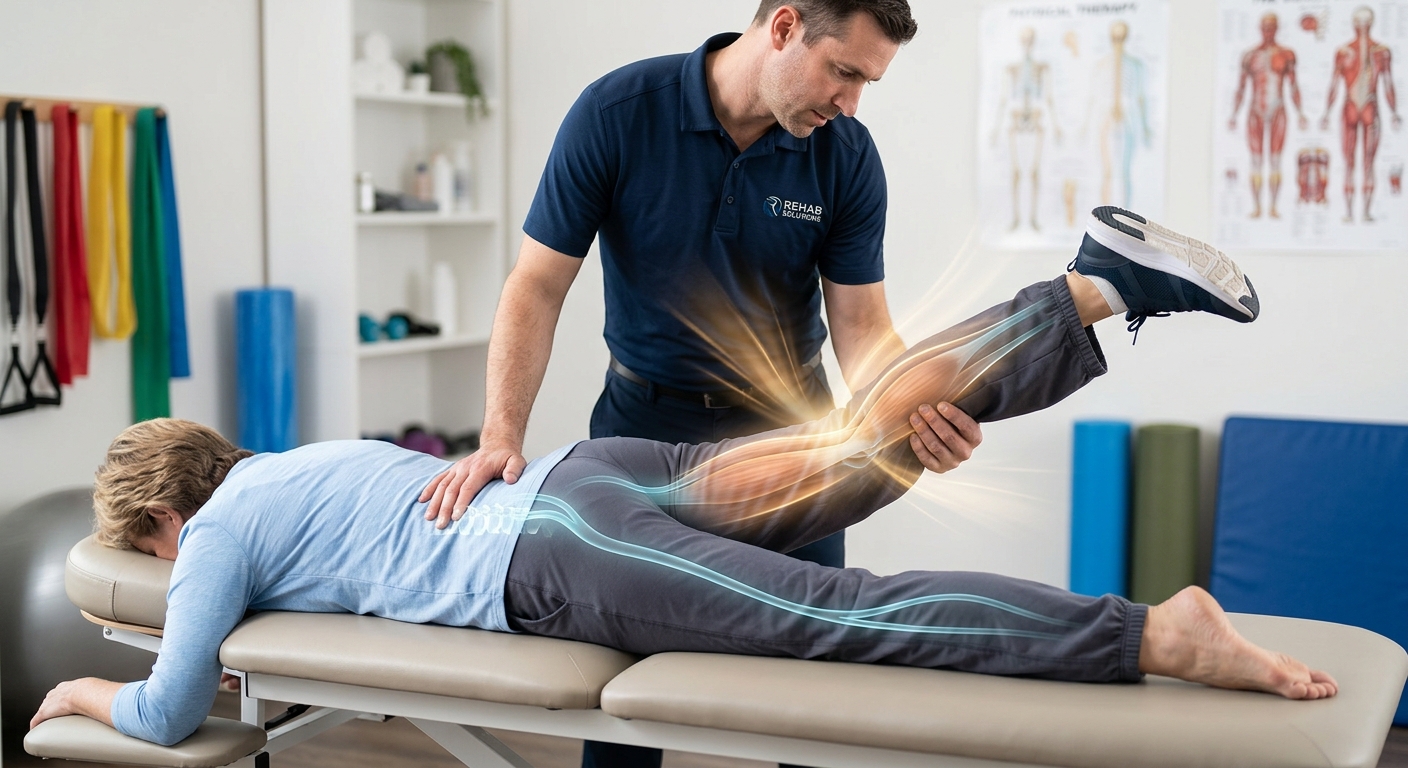
Do you suffer from a severe, throbbing ache in your deep buttock that shoots down the back of your leg, into your calf, heel, or toes? Does it feel like a sharp electric shock, burning fire, or pins and needles every time you sit down or drive? Many patients arrive at our clinic convinced they have an untreatable lumbar disc herniation. However, meticulous clinical examination frequently demonstrates that the real culprit is deep nerve entrapment: Piriformis Syndrome (often called "Pseudo-Sciatica").
At Wellness Studio Pendik, we prioritize root-cause healing over temporary medication. Through specialized Manual Therapy, Neurodynamics (Sciatic Nerve Mobilization), and Dry Needling (Intramuscular Stimulation), we relieve compressed nerves and restore painless movement in private 1-on-1 clinical settings.
Anatomical Connection: The Piriformis Muscle and the Sciatic Nerve
The sciatic nerve is the thickest and longest single nerve trunk in the human body. Originating from lumbar and sacral spinal roots (L4–S3), it travels through the pelvis and exits through the greater sciatic notch, directly underneath the pear-shaped piriformis muscle, before descending down the back of the leg.
In roughly 15–20% of individuals, anatomical variants exist where the sciatic nerve passes straight through the muscle belly. When the piriformis undergoes sustained spasm, hypertrophy, or myofascial contracture, it acts like a tight clamp crushing the sciatic nerve, triggering radiating sciatica symptoms.
Differential Diagnosis: Herniated Disc vs. Piriformis Syndrome
Telling the difference between a lumbar spine problem and piriformis entrapment is critical for effective therapy:
- Lumbar Disc Herniation: Back pain is dominant; spinal movements (forward bending) and increased intra-abdominal pressure (coughing, sneezing, straining) worsen the radiating leg pain.
- Piriformis Syndrome: Minimal or no lumbar spine pain. Deep localized gluteal tenderness upon palpation; pain intensifies after sitting for 15–20 minutes, driving, climbing stairs, or sitting cross-legged (FAIR test positive).
Common Causes and Risk Factors
- Prolonged Sitting: Sitting for hours on hard chairs or with a thick wallet in your back pocket («Wallet Sciatica» / Credit-card sciatica).
- Pelvic Torsion & Sacroiliac Subluxation: Uneven pelvic alignment forcing one piriformis to overwork as a stabilizer.
- Repetitive Overuse: Long-distance running, cycling, or abrupt surges in training volume without adequate hip mobility.
- Direct Gluteal Trauma: Falls or blunt trauma producing hematoma, fibrotic scarring, and secondary muscle contracture.
Comprehensive Manual Therapy Protocol at Wellness Studio Pendik
- Deep Myofascial Release & Soft Tissue Therapy: Targeted ischemic compression and transverse friction release chronic contractures in the deep lateral hip rotators.
- Neurodynamic Nerve Mobilization: Utilizing specialized "slider" and "tensioner" neural mobilization maneuvers to free the sciatic nerve from surrounding fibrotic adhesions and restore axoplasmic microcirculation.
- Trigger Point Dry Needling (IMS): Reaching deep piriformis motor endplates that manual fingers cannot access, releasing muscle spasm within seconds.
- Chiropractic Sacroiliac & Pelvic Re-alignment: Restoring pelvic symmetry to eliminate abnormal rotational stress on the hip joint.
Frequently Asked Questions (FAQ)
How quickly can I expect relief from piriformis sciatica?
Most patients experience significant pain reduction within 2 to 4 sessions of combined manual therapy, dry needling, and neurodynamic glide exercises.
Can an MRI confirm Piriformis Syndrome?
Routine MRIs often look normal because piriformis syndrome is primarily a dynamic functional entrapment. Dedicated pelvic neurography or clinical provocation tests by an expert physiotherapist provide the most reliable diagnosis.
Consult Us for Your Health
Let us evaluate your needs free of charge with our expert physiotherapists. You can contact us for any questions.